Passaggio Project's 2015 for EXPO MILANO
Food Culture & Intangible Cultural Heritage of Japan
brands
NAKAO

From the master chef to the apprentices, From mothers to daughters, nakao will continue to make utensils to pass on their taste, skills and spirit.
Building a legacy for quality and craftsmanship
Nakao-Alumi Co, founded by the late Tomio Nakao, has been manufacturing high quality kitchen utensils for commercial use in Japan for over 50 years. As part of our ongoing mission to pursue high quality and new ideas we visit major hotels, restaurants, and kitchens to ask
"what kind of pots are required?"
"How can we make our pots and pans more user friendly and more effective?"
As a result we've listened to professional chefs and incorporated their feedback into our products. We use only materials provided by Japanese suppliers and only manufacture in our own factory in Takahagi-city, Ibaraki Prefecture, in Japan so that we ensure the highest possible quality product.
Through continuous research and development, we strive to create better products and ensure that the Nakao name is regarded as the best of Japanese quality and contributes to the development of food culture.
We have recently introduced a new product range for domestic use which integrates professional features with improved functionality suited for home use.
In order to reach as many customers as possible all over in Japan and to answer their requirements, we have offices and branches in Kappa-bashi, Asakusa in Tokyo, Chitose in Hokkaido, Hamamatsu in Shizuoka, Namba-sennichi-mae in Osaka.
Nakao's kitchen utensils produced by craftsmen.
SAKAI TOHJI
Japanese knives

The sharpness produced by traditional bladesmithing and blade-sharpening techniques to bring out the excellence of foods
The outstanding sharpness of Sakai’s kitchen knives are highly rated by many professionals in and outside Japan.
Sakai Tohji, while adhering to traditional craftsmanship and manufacturing methods, is also engaged in developing new types of products and materials like all-stainless knife, ceramic knife and molybdenum steel.
The excellence of foods is enhanced when their ingredients have been cut well and beautifully.
Each of Sakai Tohji’s knives is made in pursuit of sharpness, the ultimate function of a knife, by maximizing the roles and characteristics of them.
Such sharpness is the reason Sakai Tohji’s knives are widely loved by so many people,from professionals to housewives.
Traditions and techniques used for knives of Sakai Tohji, a cutlery manufacturer with more than 200 years of history
Sakai Tohji,established in 1805, produces tools to enjoy cooking.
Sakai,the city of blades, has been visited by cooks all over Osaka,a region boasting a kuidoraku culture ( a culture featuring the pleasures of food),from olden times.
Sakai Tohji’s knives have also played an important role in passing down Japanese food culture for generations together with Osaka cooks seeking the sharpest knives to bring out the best of the ingredients of the foods they serve.
Every knife provided by Sakai Tohji allows you to experience the grand tradition and excellent techniques passed down through our skilled craftsmen.
Craftsmanship that inherits the tradition of Japanese culture, generation to generation
Sakai blade manufacturing involves division of labor, with each craftsman specializing in a particular process; especially, our forging and blade-sharpening specialists have devoted themselves to improving their skills and expertise.
Forging specialists’ techniques of hammering the blade material at just the right moment by sensing slight temperature differences, and the workmanship of traditional craftsmen specializing in blade-sharpening methods most suited for the characteristics of each blade...
The excellent techniques of forging and blade-sharpening not only sustain the quality of Sakai Tohji’s kitchen knives,but also contribute to the preserving traditional Japanese culture.
TSUJI HITACHI
Arita ware
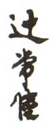
Imperial-Household purveyor kiln.
Arita ware which is the origin of Japanese porcelain.
The history has started in 1616.
Tsuji Hitachi has continued making porcelain as Imperial-Household purveyor kiln in Arita in 350 for the Imperial Household.
From the early stages of the Edo period, Tsuji Hitachi had been continuing making a tableware for mikado.
As for an Imperial-Household purveyor, Tsuji is the first as porcelain kiln.
Tsuji Hitachi which is making high quality Arita ware with the technology which was cultivated in long history.
All are carefully manufactured over many hours one by one by hand-drawn, without mass-producing.
Although a ban was removed on general sale from 50 years before, since there is little turn volume, it is observed very much among collectors.
SUS Gallery

Concept
“SUS” in “SUS gallery” has two meanings: the abbreviation of “stainless used steel” and “sustainability”. SUS gallery proposes a sustainable and quality lifestyle in urban area, using sustainable resources such as titanium and stainless steel and evolving such resources into lively products through the collaboration between the craftsmanship in Tsubame and sensitivities of designers.Tsubame
Tsubame, in Niigata Prefecture, is a city well known for metalworking, and it is here where the idea for SUSgallery was born. The metal products made in Tsubame are famous worldwide and attract the attention of buyers all over the world. Tsubame has a 350-year history in metalworking, and the metalworkers in this region are known to take great pride in the craftsmanship of their wares. SUSgallery passes on this tradition to the modern world by creating table were that combine traditional values with the advances of modern technology.Airless (Vacuum) layer titanium tableware
Airless layer titanium cup symbolizes the “unity of tradition and advanced technology ”. The rugged shape looks as if it were pottery and has a traditional Japanese taste, but titanium, one of the cutting-edge materials, is used for the cup. The snow-like, crystalline surface pattern is produced by our unique and sophisticated manufacturing technique and, is the result of the advanced technology being incorporated into the traditional beauty. We hope that the product builds ties among people by stimulating all five senses with the unique texture, the sound of ice cubes, the taste and aroma of beverage and the sight and by producing much enriching times for the users.Functionality
「Airless layer titanium cup」is made entirely of two thin titanium plates, creating a durable double airless layer structure. The space between the plates is the secret of 「 Airless layer titanium cup 」excellent thermal insulation. Since the natural heat of a hand is not transmitted to the drink, ice hardly melts in a cold drink and a hot drink doesn’t cool down. There is almost no condensation produced when ice is placed in the cup, and perhaps most importantly, the flavor of a drink does not change. It’s easy to see why 「 Airless layer titanium cup 」 is a very useful product for any social occasion. Since the lip of the cup is thin, 「 Airless layer titanium cup 」can also be used as a glass. It is important to note that titanium has been long used in medical institutions and also for fashion accessory products. 「 Airless layer titanium cup 」is light, durable, safe and beautiful. In all respects, 「 Airless layer titanium cup 」 is a high-quality product designed for long-term use.Color series
In the airless layer titanium cup color series, by changing the thickness of the oxide layer of the titanium surface at a nano-level, the reflection of light on the titanium surface changes and it seems as if it had been colored. The change is similar to the surface of transparent soap bubbles seemingly having seven colors due to the influence of light. In particular, because magenta is a delicate interference color and the oxide layer on the surface is influenced by the thickness of the transparency of hand sebum, when you touch the magenta cup, the color seems to change to blue purple. When it is washed by neutral dishwasher detergent, the color seems slightly deeper and it then returns to the original color after it is dried up.APEC 2010
At APEC(Asia-Pacific Co-operation) meeting November 2010, our airless layer titanium cups (mirror finish) were chosen as gifts to the 20 heads of state who were visiting Japanese city of Yokohama for the occasion, while our new wine cups graced the lunch table on 14 November and used for toast, since these products were deemed representative of the theme of this meeting, “Hospitaly through Japanese technology”AMBIENTEC

Bottled is a rechargeable cordless lamp that can be used anywhere. It looks as if light is contained within a bottle. A glass shade and a handle together make a seamless solid body, and this design was born rather
naturally from the idea of creating a handy, portable lamp while making the most of the LED’s heat dissipation characteristics. Its simple means of operation also makes the lamp very easy to use. While diffusing soft light through the shade with a special coating on the inside, this high-quality lamp emphasises the sheen and clarity of the glass by fully embracing the texture of the material.
In addition, a four-level dimming function allows you to adjust the level of brightness depending on the location. The structure to improve the efficiency of LED light emission and to minimize any loss of energy due to heat generation makes it possible to deliver up to 100 hours of continuous lighting. This waterproof lamp is suitable for indoor use in a living room or at the bedside as well as for outdoor use in a terrace or garden. With the cordless feature, you can find ways to use it freely.
Announced in 2012, released in 2013.
Ambientec’s lighting project was conceived in response to the need for a form of illumination
that could be freely enjoyed anywhere, anytime.
A form of illumination that would be both human-friendly and earth-friendly.